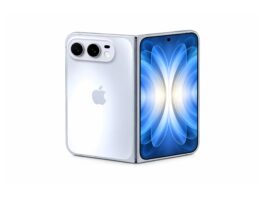


Watching the recent wave of iPhone Duo reviews feels like looking into a mirror for Apple’s product lineup. The excitement around ultra-portable, dual-screen computing proves that users are craving massive visual real estate inside a package that still fits comfortably in one hand or a small sling bag.
Yet, while the iPhone Duo pushes boundaries, it also highlights an obvious opening right under Apple’s nose: the iPad mini.
For years, the iPad mini has occupied a quiet, almost forgotten corner of the tablet market. It was treated as an afterthought—an entryway tablet rather than a powerhouse. But looking at where mobile hardware, display technology, and silicon efficiency are heading, Apple is sitting on a goldmine. By giving the smallest iPad the flagship treatment, Apple could easily turn its most compact slate into an absolute daily driver.
The Formula: How Small Changes Equal Massive Potential
The iPad mini’s undeniable superpower has always been its footprint. It is light, easy to hold with one hand, and goes where larger tablets simply cannot. However, its current hardware feels held back by compromise.
If Apple borrows a page from its flagship playbook, three specific upgrades could revolutionize the device without adding a single millimeter to its outer physical shell.
  Current Footprint                 Next-Gen Flagship Concept
+-------------------+             +---------------------------+
| [   Thick Bezel  ] |             | [ Thin Bezel ]            |
| [                ] |             | [                        ] |
| [   LCD Display  ] |  ========>  | [   Punchy OLED Panel    ] |
| [                ] |             | [                        ] |
| [  Portrait Cam  ] |             | [  Landscape Center Cam  ] |
+-------------------+             +---------------------------+
  A17 Pro Performance               A20 Pro + 12GB Unified Memory
1. Slimmer Bezels Means “More Screen” Without the Bulk
The most immediate fix involves panel geometry. By shrinking the relatively thick borders down to modern Pro-level standards, Apple could expand the screen size while keeping the exact same portable chassis. You get a display that feels significantly bigger and far more immersive, without losing the ability to drop it into a coat pocket.
2. An OLED Panel for Pure Visual Immersion
Moving from a traditional LCD to an OLED panel changes everything.
True Blacks & Inky Contrast: Movies and photos pop in a way LCDs simply can’t match.
Elimination of Scroll Artifacts: Paired with potential high-refresh-rate capabilities, OLED solves classic display quirks, giving every scroll a butter-smooth feel.
Power Efficiency: Dark modes truly save battery, allowing for all-day life despite high performance.
3. A20 Pro Silicon: Unlocking Desktop-Class Muscle
Dropping the upcoming A20 Pro processor into a tablet this small sounds like overkill, but it completely changes the device’s identity. With 12GB of unified memory and upgraded hardware acceleration, a compact tablet stops being a secondary content consumer and transforms into a portable workstation.
| Hardware Feature | Current Generation | Next-Gen Pro Potential | Real-World Impact |
| Processor | A17 Pro (Binned) | A20 Pro Silicon | Ray-traced gaming, instant AI processing |
| RAM | 8GB | 12GB Unified Memory | Heavy multitasking without app reloading |
| Display Panel | IPS LCD | High-Dynamic Range OLED | Infinite contrast, rich color gamut |
| Camera Orientation | Portrait-first | Landscape-centered | Natural, eye-level video calls |
Fixing the Everyday Friction Points
Beyond raw speed and display panels, ergonomic refinements would elevate the day-to-day experience.
The Landscape Front Camera Fix
Holding a tablet for video calls should feel effortless. Moving the front-facing camera to the long landscape edge—matching the rest of the modern iPad lineup—makes FaceTime and video conferences far more natural. No more looking off to the side when the tablet is sitting horizontally on a stand or desk dock.
Portrait Layout (Awkward Angle)       Landscape Layout (Natural Eye Contact)
      +-----------------+                   +-------------------+
      |      [o]        |                   |        [o]        |
      |                 |                   |                   |
      |                 |    =========>     |                   |
      |                 |                   |                   |
      +-----------------+                   +-------------------+
The Ultimate Handheld Gaming Machine
An OLED screen paired with A20 Pro performance creates what might be the ultimate portable gaming rig. Unlike heavy dedicated gaming handhelds, a refreshed mini remains lightweight and whisper-thin. With AAA titles increasingly coming to mobile hardware, playing graphics-heavy games on an ultra-vibrant OLED screen with a connected wireless controller is an absolute dream scenario.
Final Thoughts: Small Device, Massive Potential
The key takeaway from recent product launches is simple: size doesn’t determine value; capability does.
Users don’t buy small devices because they want stripped-down, budget experiences. They buy them because portability is a feature in itself. If Apple embraces this vision by trimming the bezels, upgrading the screen, and packing flagship silicon inside, the iPad mini won’t just be an alternative—it will be one of the most compelling tech devices on the market.